Understanding how to tell when brake pads need replacement is crucial for vehicle safety. According to the National Highway Traffic Safety Administration (NHTSA), brake issues contribute to numerous accidents annually. Regular maintenance can prevent these dangerous situations and ensure safety on the road.
Brake pads wear down over time, and various signs indicate they may need replacement. A study by the Automotive Service Association estimates that nearly 70% of vehicle owners neglect regular brake inspections. This can lead to serious issues, including reduced braking efficiency and accidents. Drivers should be attentive to noises such as squeaking or grinding, which are clear indicators.
Monitoring tire wear and brake pedal response can also provide insight. Uneven tire wear may signal brake issues, while a soft or spongy brake pedal can indicate that the pads are worn. Addressing these concerns promptly can save money and enhance safety. As we explore the best signs for brake pad replacement, arm yourself with the knowledge to prevent potential hazards on the road.
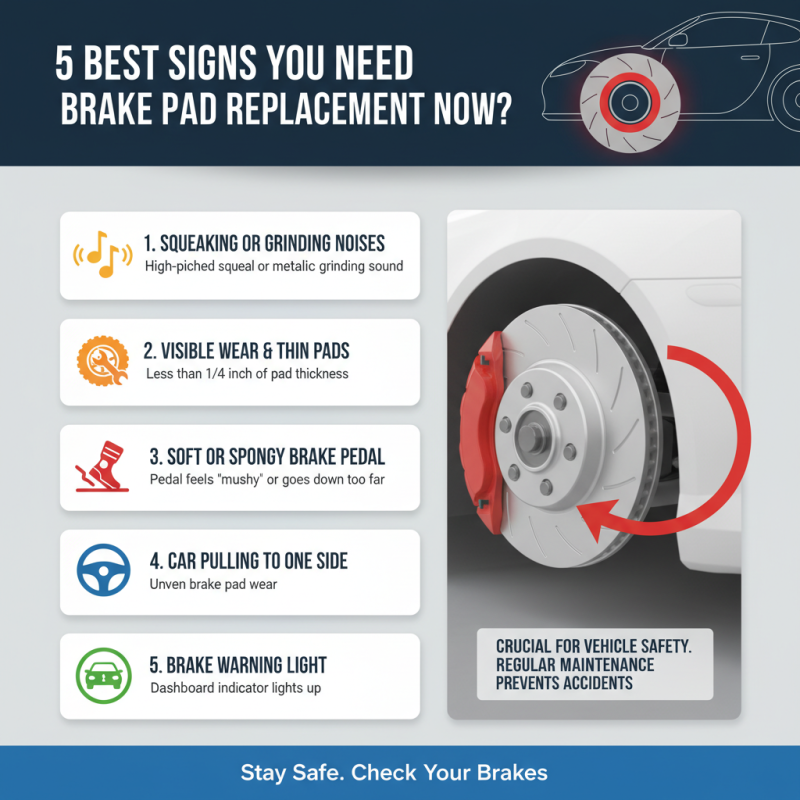
When it comes to the safety of your vehicle, brake pads play a critical role. Worn brake pads can lead to serious braking issues. One clear sign you need a replacement is a squeaking or grinding noise when you brake. This sound often indicates that the friction material is worn down. If you hear such noises, it's crucial to assess your brake pads promptly.
Another symptom to watch for is a vibration in the brake pedal. This can be unsettling and often signals uneven wear or damage to the brake components. If your car pulls to one side during braking, that might indicate imbalanced brake pads. Checking them at this stage is critical for your safety.
Finally, if you notice a longer stopping distance, it’s definitely time for inspection. Increased effort needed to stop means your pads are likely compromised. Ignoring these signs can lead to more costly repairs in the future. Stay vigilant; your brakes are your first line of defense on the road.
| Sign | Description | Suggested Action |
|---|---|---|
| Squeaking or Squealing Noise | A high-pitched sound when the brakes are applied indicates worn brake pads. | Replace brake pads immediately. |
| Grinding Noise | A metal grinding sound while braking means brake pads are completely worn down, risking damage to rotors. | Replace pads and inspect rotors. |
| Vibration When Braking | Feeling vibrations or pulsation in the brake pedal indicates uneven wear or warping. | Have brake system inspected; replace pads if needed. |
| Warning Light | Dashboard warning light for brakes could indicate worn pads or other brake issues. | Check with a mechanic to diagnose the issue. |
| Reduced Responsiveness | Longer stopping distance or feeling a delay when braking can be a sign of worn pads. | Inspect and replace brake pads as soon as possible. |
: Look for squeaking or grinding noises when braking. Vibration in the pedal also indicates potential issues.
Worn pads can lead to longer stopping distances and braking failures. This significantly increases accident risk.
Replace them every 25,000 to 70,000 miles, depending on vehicle type and driving conditions.
Ignoring worn pads can lead to costly repairs and reduced vehicle safety. It's not worth the risk.
Seek help if you hear noise, feel vibrations, or experience pulling during braking. Early intervention is vital.
Yes, timely checks can prevent expensive repairs and maintain vehicle safety. Avoiding maintenance can be costly.
Yes, nearly 70% of drivers wait too long, putting safety at risk and increasing repair costs.
Many drivers underestimate its importance or ignore symptoms. This neglect can lead to severe consequences.
If you notice this, consult a professional immediately. Delaying could compromise your safety.
A longer stopping distance can indicate worn pads. Don't dismiss this critical symptom for safety reasons.
Understanding how to tell when brake pads need replacement is crucial for maintaining vehicle safety. Common symptoms of worn brake pads include squeaking or grinding noises, a decrease in stopping power, and a vibrating brake pedal. Regular maintenance of brake pads is essential, as neglecting their condition can lead to more severe brake system issues and costly repairs.
To ensure your brake pads are in good condition, it's advisable to perform home inspections periodically. Look for signs of wear, such as reduced thickness or uneven surfaces. If you notice any concerning signs or are unsure about the condition of your brake pads, seeking professional assistance can help address potential issues before they escalate. Ignoring brake pad replacement not only compromises your safety but can also lead to significant damage to other components of your braking system.

 MOAD AUTO