China’s brake systems operate under demanding conditions, from crowded urban traffic to mountain roads and heavy commercial routes. Drivers often ask, “what are common problems with brake systems” when they notice vibration, noise, delayed response, or uneven stopping. These symptoms can appear minor, but they may signal worn pads, contaminated brake fluid, warped discs, air in hydraulic lines, or electronic control faults.
The World Health Organization reports about 1.19 million road deaths worldwide each year. Its Global Status Report on Road Safety also identifies vehicle safety and maintenance as important risk-control factors. Brakes are not responsible for every crash, of course. Still, poor braking performance can reduce stopping distance margins when traffic changes suddenly. China’s State Administration for Market Regulation publishes vehicle recall notices and defect information, while GB 12676 defines important braking requirements for motor vehicles and trailers. These sources provide a useful compliance baseline, not a complete picture of workshop conditions.
Real-world inspection adds another layer. A technician may find blue heat spots on a disc, a soft pedal after repeated downhill braking, or rust around a caliper piston. Electric vehicles create different concerns, because regenerative braking can reduce friction-brake use and allow corrosion to develop quietly. The SAE and NHTSA research communities also emphasize testing, driver feedback, and system-level diagnostics. However, no single report explains every failure in China. Road dust, overloaded vehicles, replacement-part quality, and maintenance habits vary widely. That uncertainty deserves attention, not convenient assumptions.
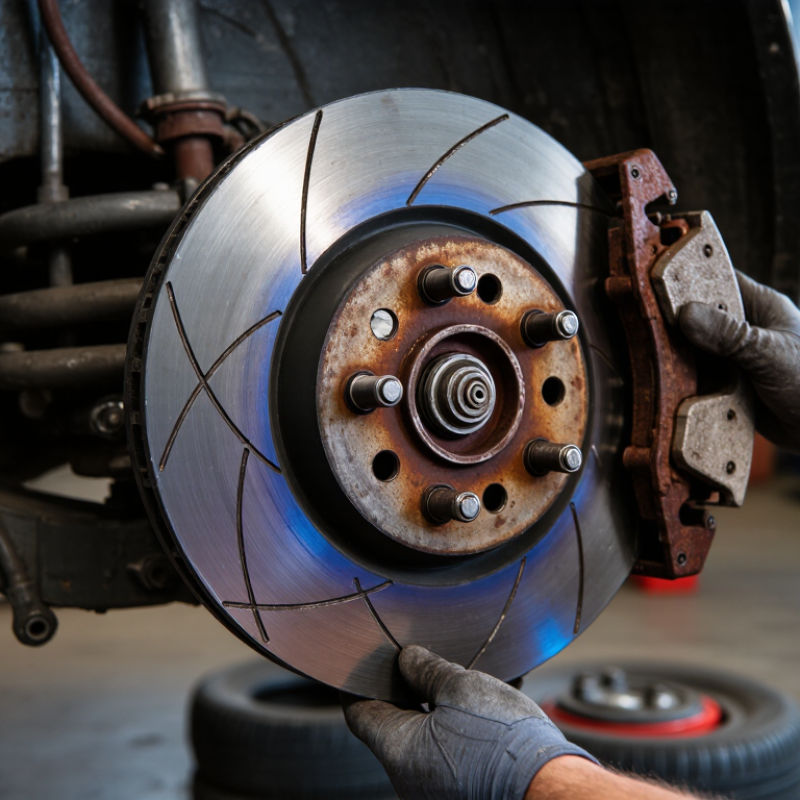
A brake system is not a single part. It is a chain of components, and each link affects stopping performance. The brake pedal transfers driver input to the master cylinder. The master cylinder then builds hydraulic pressure. Brake fluid carries that pressure through steel pipes and flexible hoses. At each wheel, calipers or wheel cylinders press friction material against discs or drums.
The friction pair creates heat, so ventilation matters. A worn pad, glazed surface, or warped disc can cause vibration, noise, and longer stopping distances. The Anti-lock Braking System monitors wheel speed and releases pressure when a wheel begins locking. Its control unit, sensors, hydraulic modulator, and wiring must work together. According to the World Health Organization’s Global Status Report on Road Safety 2023, about 1.19 million people die in road crashes annually. Small component failures deserve serious attention.
Electronic stability control adds another layer. It can apply individual brakes during sudden steering, helping maintain vehicle direction. The U.S. National Highway Traffic Safety Administration reports that electronic stability control reduces fatal single-vehicle crash risk. Yet diagnosis is not always perfect. A clean sensor may still send unstable signals. A new pad may not solve uneven braking if the caliper guide pins remain dry. Technicians should inspect pressure, temperature, friction thickness, fluid condition, and fault data together. One measurement is rarely enough. Sometimes, the overlooked hose is the real problem.
Brake fluid boiling-point benchmarks and the hydraulic risk caused by moisture contamination
Transfers hydraulic pressure from the master cylinder to the wheel brakes. Moisture lowers its boiling point and can cause vapor lock or a soft pedal.
Convert hydraulic force into friction at the rotor. Wear, glazing, contamination, and uneven contact can reduce braking performance.
Absorb and dissipate braking heat. Corrosion, distortion, cracking, or excessive wear may cause vibration and reduced stopping efficiency.
Wheel-speed sensors and hydraulic modulators help prevent wheel lock. Sensor damage or electrical faults can disable ABS assistance.
Reference values show minimum boiling-point requirements commonly specified by FMVSS No. 116 for DOT brake-fluid classifications. Actual product performance may be higher.
What Are Common Problems With China Brake Systems?
Common Quality Problems in China Brake Systems
Quality in China brake systems can vary widely between suppliers and production batches. The country has advanced factories, but not every factory follows the same controls. A low purchase price may hide weaker inspection.
One common issue is inconsistent friction material. Brake pads from different batches may produce different stopping feel, noise, or dust levels. Some rotors also show excessive runout after machining. The steering wheel may shake during braking. Casting porosity, uneven thickness, and poor surface finishing can make this worse. Small defects matter.
Seals and rubber components deserve close attention. Inferior materials may harden after heat exposure or swell when exposed to brake fluid. Caliper leakage can then appear during use. Coating quality is another concern, especially in wet or salty environments. Rust may begin around drilled holes, edges, or unfinished mounting surfaces. Packaging damage can create problems before installation. It is easy to overlook this point.
Reliable purchasing requires more than a sample inspection. Buyers should request material specifications, dimensional reports, batch traceability, and documented dynamometer testing. Testing should cover cold stops, repeated braking, and high-temperature recovery. Installation checks remain essential because incorrect torque, contaminated hubs, or trapped air can imitate product failure. A checklist helps, but it is not perfect. I have seen acceptable test reports fail to explain real-world noise. Supplier communication and independent verification still matter.
Brake systems made in China can perform reliably when materials, fitment, and quality control are consistent. Problems often appear when these factors are poorly matched. Brake noise may come from glazed pads, hard friction material, loose shims, or dust trapped between contact surfaces. A sharp squeal after light braking deserves attention.
Vibration usually points to uneven rotor thickness, excessive runout, or incorrect wheel installation. It may feel through the steering wheel during highway braking. Uneven pad wear can result from a sticking caliper, seized slide pins, or a damaged hose. Poor bedding-in can also leave patchy friction marks. That mistake is easy to overlook.
Tips: Check rotor runout with a gauge, not by sight alone. Compare pad thickness across each axle. Clean hub faces before installing rotors. Use the specified torque pattern for wheel fasteners. Inspect caliper movement during every brake service. Do not assume new parts solve the cause. In my experience, technicians sometimes replace pads too quickly. I have made that assumption myself. A short road test, followed by a cool-down inspection, often reveals whether the noise, vibration, or wear is returning.
What Are Common Problems With China Brake Systems?
Safety Risks Linked to Poor Brake Performance
Brake systems made in China can vary widely in material quality, design control, and factory testing. The country has both highly capable manufacturers and suppliers with inconsistent production practices. Safety depends on the specific component, not its origin alone.
In workshop inspections, common concerns include uneven brake-pad friction, soft pedal response, and premature rotor wear. A vehicle may pull left or right during braking. That can become dangerous on wet roads or near pedestrians. Low-quality pads may also produce excessive dust, vibration, or fading after repeated stops. Fading is especially serious because the pedal may feel normal while stopping power drops.
Poorly machined rotors can create steering-wheel pulsation within a short period. Weak seals may allow moisture into hydraulic parts, reducing pressure and causing leaks. Small defects matter. A cracked hose or loose fitting can lead to sudden brake failure.
Reliable evaluation requires more than a visual check. Technicians should measure rotor thickness, inspect pad wear, test brake-fluid condition, and compare stopping performance under controlled conditions. Compliance markings should be verified against appropriate safety requirements, not accepted blindly. I have seen assumptions replace measurement, and that is a risky shortcut. No inspection is perfect. A careful mechanic can still miss a problem hidden inside a caliper or hydraulic line. Replacement parts should be traceable, correctly fitted, and tested before regular driving.
| Common Problem | Typical Technical Cause | Warning Signs | Safety Risk | Inspection Indicators | Recommended Corrective Action | Risk Level |
|---|---|---|---|---|---|---|
| Uneven brake pad wear | Sticking caliper pins, restricted hydraulic flow, poor pad fit, or a distorted pad abutment surface. | Vehicle pulling to one side, uneven pad thickness, localized heat, or premature wear on one wheel. | Reduced braking balance and possible loss of directional stability during hard braking. | Compare inner and outer pad thickness; check caliper movement, guide pins, and brake hose condition. | Correct the mechanical cause, replace damaged components, and service the brake assembly according to vehicle specifications. | High |
| Brake fade under repeated braking | Excessive heat, unsuitable friction material, inadequate cooling, or contaminated brake components. | Pedal feels normal but the vehicle takes longer to stop after repeated braking or downhill driving. | Longer stopping distances and reduced braking effectiveness during emergencies. | Check for heat discoloration, glazed pads, friction-surface damage, and evidence of overheated fluid. | Use correctly specified friction components, identify the source of overheating, and replace heat-damaged parts. | Critical |
| Brake judder or steering vibration | Disc thickness variation, rotor runout, uneven deposits, improper wheel installation, or worn suspension parts. | Pulsating brake pedal, vibration through the steering wheel, or shaking during moderate braking. | Reduced driver control and inconsistent contact between the pad and rotor. | Measure rotor thickness and runout with appropriate tools; inspect wheel torque and suspension components. | Machine or replace components only when permitted by the service specification; correct wheel and suspension faults. | High |
| Excessive brake noise | Hard or incompatible friction material, missing hardware, surface contamination, or incorrect bedding-in. | Squealing, grinding, clicking, or metallic scraping during braking. | Noise may indicate friction-surface damage, metal-to-metal contact, or an incorrectly secured component. | Inspect pad thickness, clips, shims, rotor scoring, foreign material, and caliper fasteners. | Do not ignore grinding; replace worn or damaged parts and install the required anti-rattle hardware correctly. | High |
| Soft or spongy brake pedal | Air in the hydraulic system, low fluid level, flexible hose expansion, leakage, or incorrect bleeding. | Pedal travels farther than usual, feels soft, or improves temporarily when pumped. | Reduced hydraulic pressure and a serious risk of inadequate braking or pedal loss. | Check fluid level, visible leaks, hose condition, master-cylinder operation, and air in the lines. | Stop using the vehicle if the pedal is unexpectedly soft; repair leaks and bleed the system using the specified procedure. | Critical |
| Low-quality or contaminated brake fluid | Wrong fluid type, moisture absorption, chemical contamination, or extended service life. | Dark or contaminated fluid, corrosion symptoms, spongy pedal, or reduced performance when hot. | Moisture can lower the fluid boiling point and contribute to vapor formation during heavy braking. | Verify the specified fluid type; inspect condition and moisture level with suitable testing equipment. | Flush and replace fluid according to the vehicle manufacturer’s specification; never mix incompatible fluid types. | Critical |
| Premature pad or rotor wear | Incorrect material, poor friction-surface quality, dragging brakes, overloaded operation, or unsuitable component dimensions. | Frequent replacement, deep rotor grooves, rapid thickness loss, or visible heat spots. | The braking system may reach its wear limit sooner than expected, reducing available friction material. | Measure pad and rotor thickness against the vehicle’s service limits; inspect for drag and abnormal wear patterns. | Replace components that are below specification and resolve caliper, bearing, or installation problems. | High |
| ABS warning or sensor malfunction | Damaged wheel-speed sensor, wiring fault, poor sensor alignment, tone-ring damage, or control-module fault. | ABS or stability-control warning lamp, stored diagnostic code, or loss of ABS intervention. | The base hydraulic brakes may still operate, but wheel lock prevention and electronic stability functions can be unavailable. | Scan the system for diagnostic codes and inspect sensor signals, wiring, connectors, and wheel bearings. | Diagnose the electrical and mechanical cause, repair it, and confirm that the warning lamp clears after testing. | High |
| Hydraulic leakage | Damaged seals, corroded pipes, loose fittings, cracked hoses, or defective hydraulic components. | Falling fluid level, wetness around components, illuminated warning lamp, or a sinking pedal. | Progressive loss of hydraulic pressure can cause partial or complete brake failure. | Inspect the master cylinder, calipers, wheel cylinders, hoses, pipes, fittings, and reservoir. | Do not drive with an active leak; replace the failed part, refill with the specified fluid, and bleed and test the system. | Critical |
| Incorrect installation or component mismatch | Wrong dimensions, incorrect friction grade, missing retaining hardware, improper torque, or failure to follow the vehicle-specific procedure. | Immediate noise, poor pedal feel, uneven braking, loose parts, or interference after installation. | A component may detach, bind, overheat, or fail to provide the designed braking force. | Confirm part dimensions, fitment, friction specification, fastener torque, clearances, and post-installation operation. | Use vehicle-specific parts and procedures, complete a controlled bedding process, and perform a professional road test. | Critical |
Note: Brake component wear limits, fluid requirements, torque values, and replacement intervals vary by vehicle. Always verify the applicable vehicle service specifications and legal safety requirements before repair or replacement.
Brake systems made in China can perform reliably when their materials, tolerances, and assembly controls are consistent. Common problems include uneven pad wear, soft pedal response, surface rust, fluid leakage, and vibration during braking. These symptoms may result from poor bedding, contaminated friction surfaces, incorrect installation, or inconsistent component dimensions.
Inspection should begin with the brake discs, pads, calipers, hoses, and fluid reservoir. Technicians should measure disc thickness and runout with calibrated tools, not rely only on visual checks. Small differences matter.
Maintenance must follow the vehicle maker’s service intervals and the component supplier’s technical data. Replace damaged seals, clean sliding pins, and use the correct brake fluid. Never mix fluids without confirmation.
After installation, technicians should perform controlled road tests in a safe area and record pedal feel, stopping behavior, and unusual noise. A checklist helps, but it is not perfect. Human error still occurs.
Tips: Check torque values twice. Keep friction surfaces dry. Photograph worn parts before replacement. Store removed components for review. If braking feels inconsistent, stop driving and seek qualified inspection. Quality improvement depends on traceable materials, batch testing, supplier audits, and repeated durability trials. Statistical process control can reveal thickness variation before products reach vehicles. Feedback from repair shops should return to design and production teams. That loop is often weak, and it deserves more attention.
Yes, if materials, fitment, tolerances, and quality control remain consistent. Origin alone does not determine safety. Specific parts matter.
Glazed pads, hard friction material, loose shims, or trapped dust can create squealing. A sharp squeal after light braking deserves inspection.
Uneven rotor thickness or excessive runout may cause vibration. Incorrect wheel installation can also contribute. Measure runout with a gauge.
A sticking caliper, seized slide pins, or a damaged hose may restrict movement. Poor bedding can leave patchy friction marks.
A soft pedal, fluid leak, sudden pulling, or reduced stopping power needs prompt inspection. Stop driving if braking feels inconsistent.
Measure rotor thickness and runout with calibrated tools. Compare pad thickness across each axle. Inspect calipers, hoses, seals, and fluid condition.
Not always. Replacing pads may hide a sticking caliper or damaged hose. I have made that assumption myself. Measurement is safer.
Clean hub faces before fitting rotors. Keep friction surfaces dry. Use the specified torque pattern for wheel fasteners. Check torque twice.
Perform a controlled road test in a safe area. Note pedal feel, stopping behavior, and noise. Let the brakes cool, then inspect again.
Use traceable materials, batch testing, supplier audits, and durability trials. Feedback should reach design teams. That loop is often weak.
Understanding what are common problems with brake systems is essential for evaluating safety and performance, especially in China brake systems produced with varying levels of quality control. Key components such as brake pads, discs, calipers, hydraulic lines, master cylinders, and sensors must work together to convert pedal pressure into reliable stopping force. Common problems include inconsistent friction materials, warped discs, premature wear, fluid leakage, corrosion, and inaccurate assembly tolerances.
Brake noise, vibration, and uneven wear may result from poor surface finishing, contamination, misalignment, overheating, or improper bedding-in. These issues can increase stopping distances, reduce driver control, and create serious safety risks in demanding conditions. Regular inspection should include pad thickness, disc condition, fluid level, hydraulic pressure, caliper movement, and electronic warning signals. Quality can be improved through certified materials, precise manufacturing, thorough testing, traceable inspections, proper installation, and scheduled maintenance. A consistent quality-management process helps ensure dependable braking performance and longer component service life.

MOAD AUTO