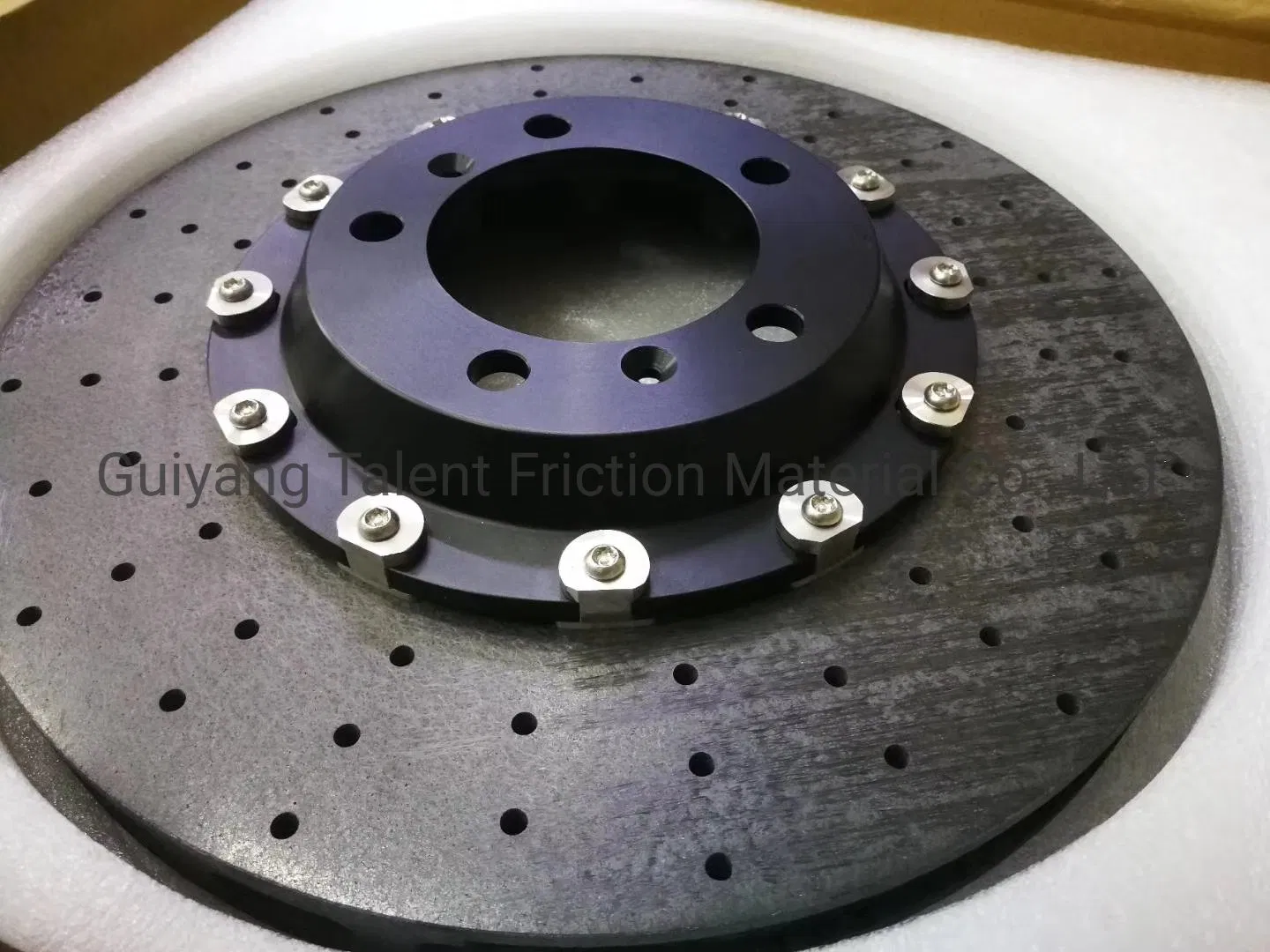
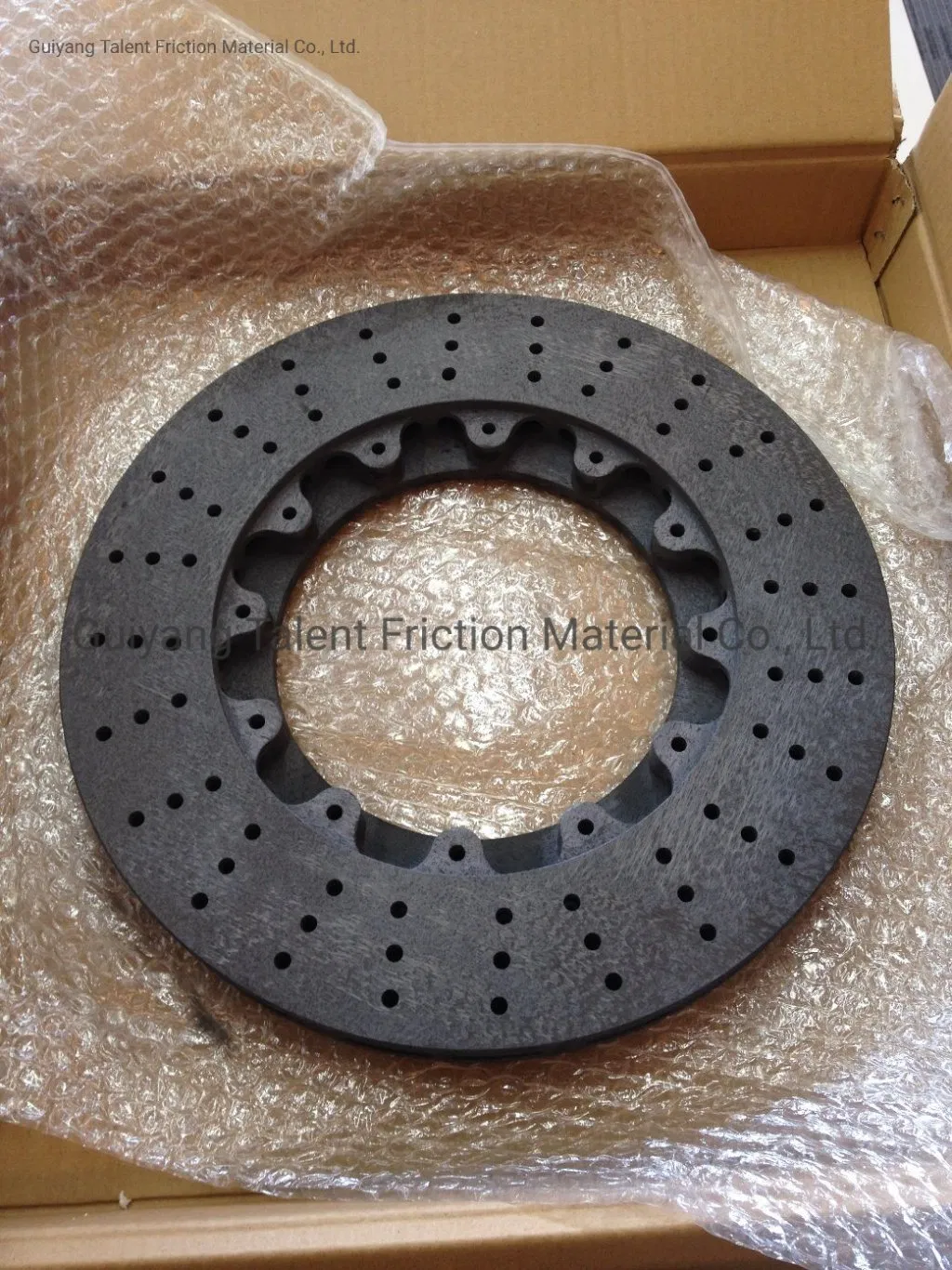
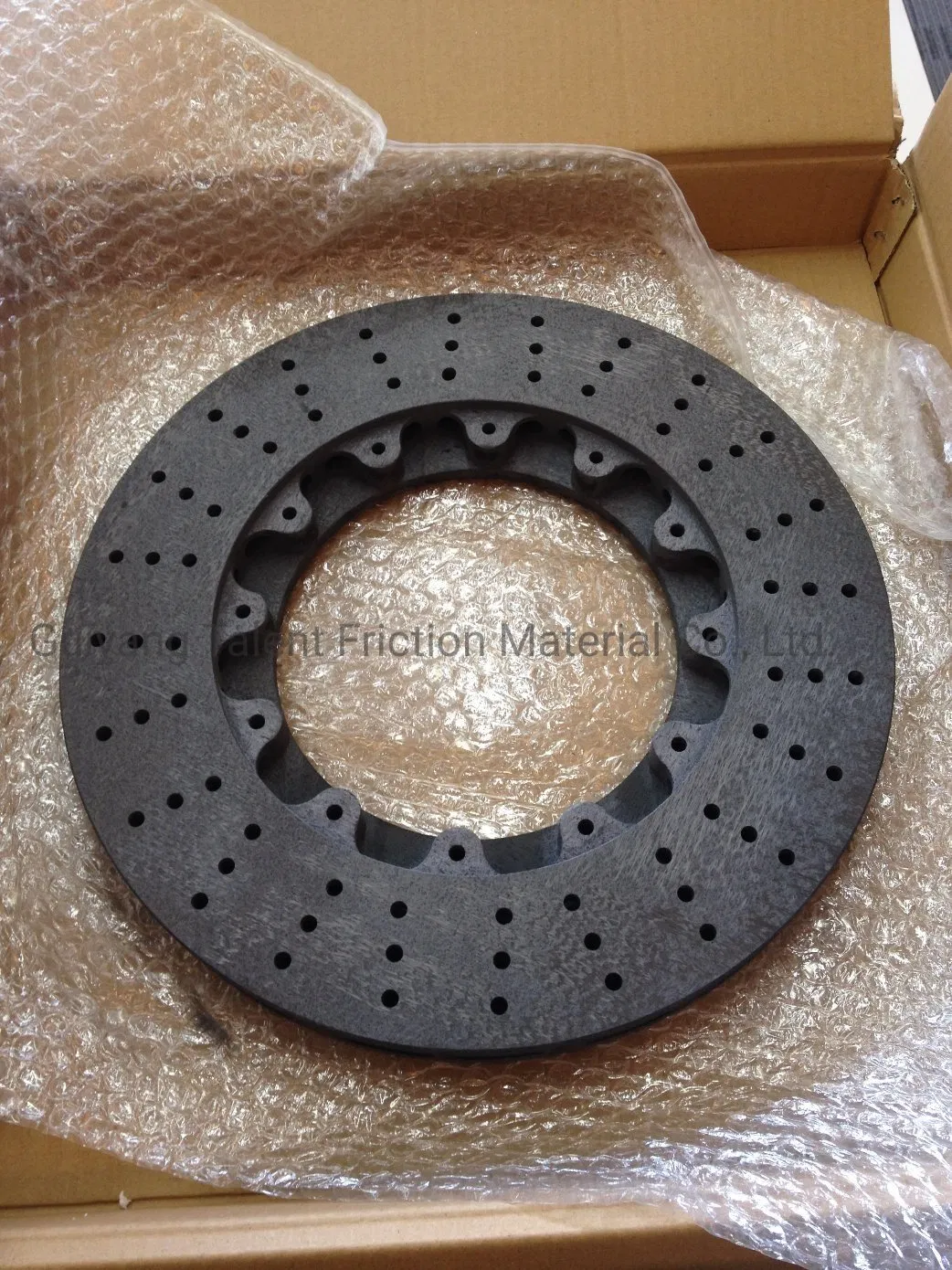
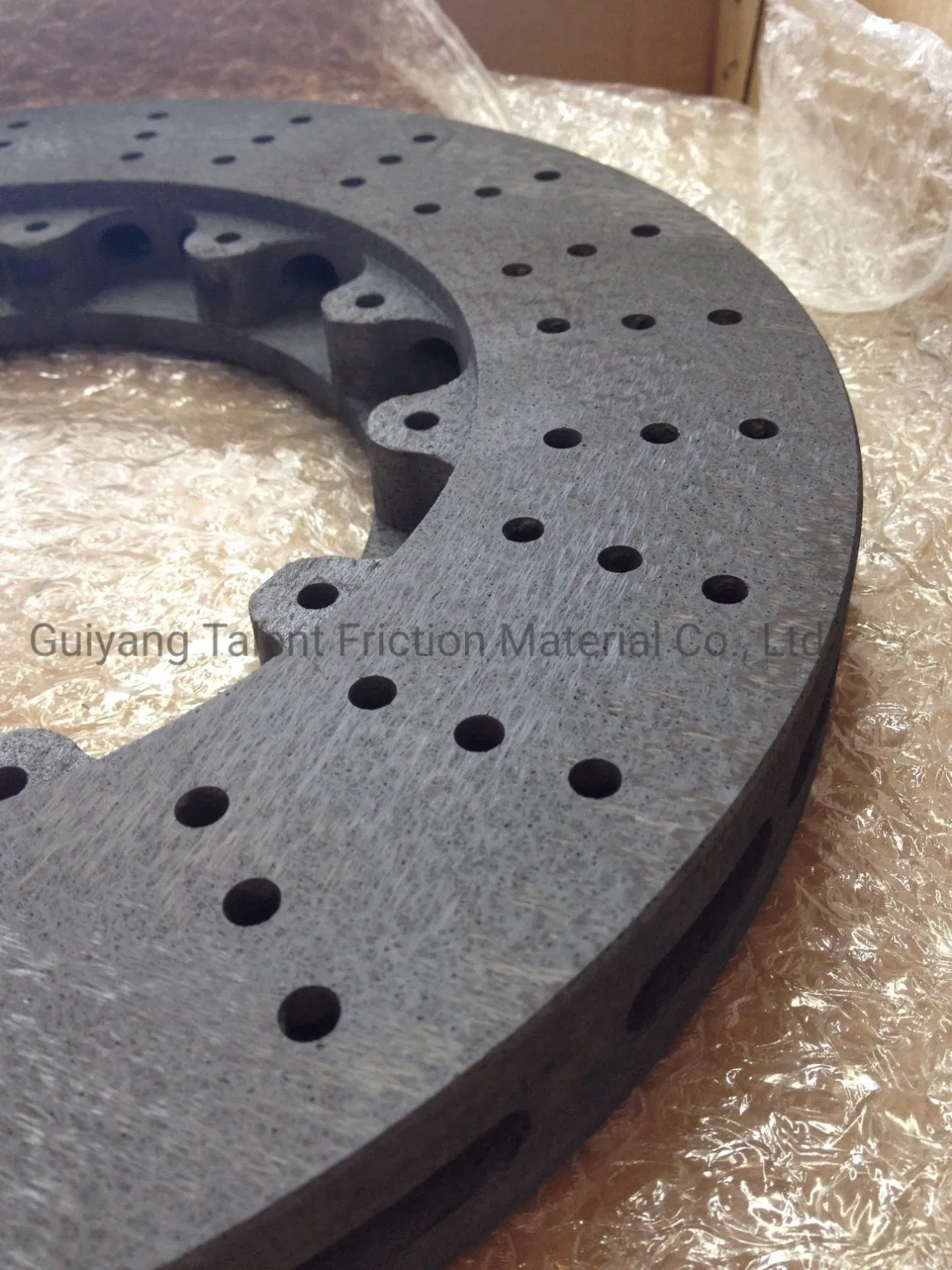
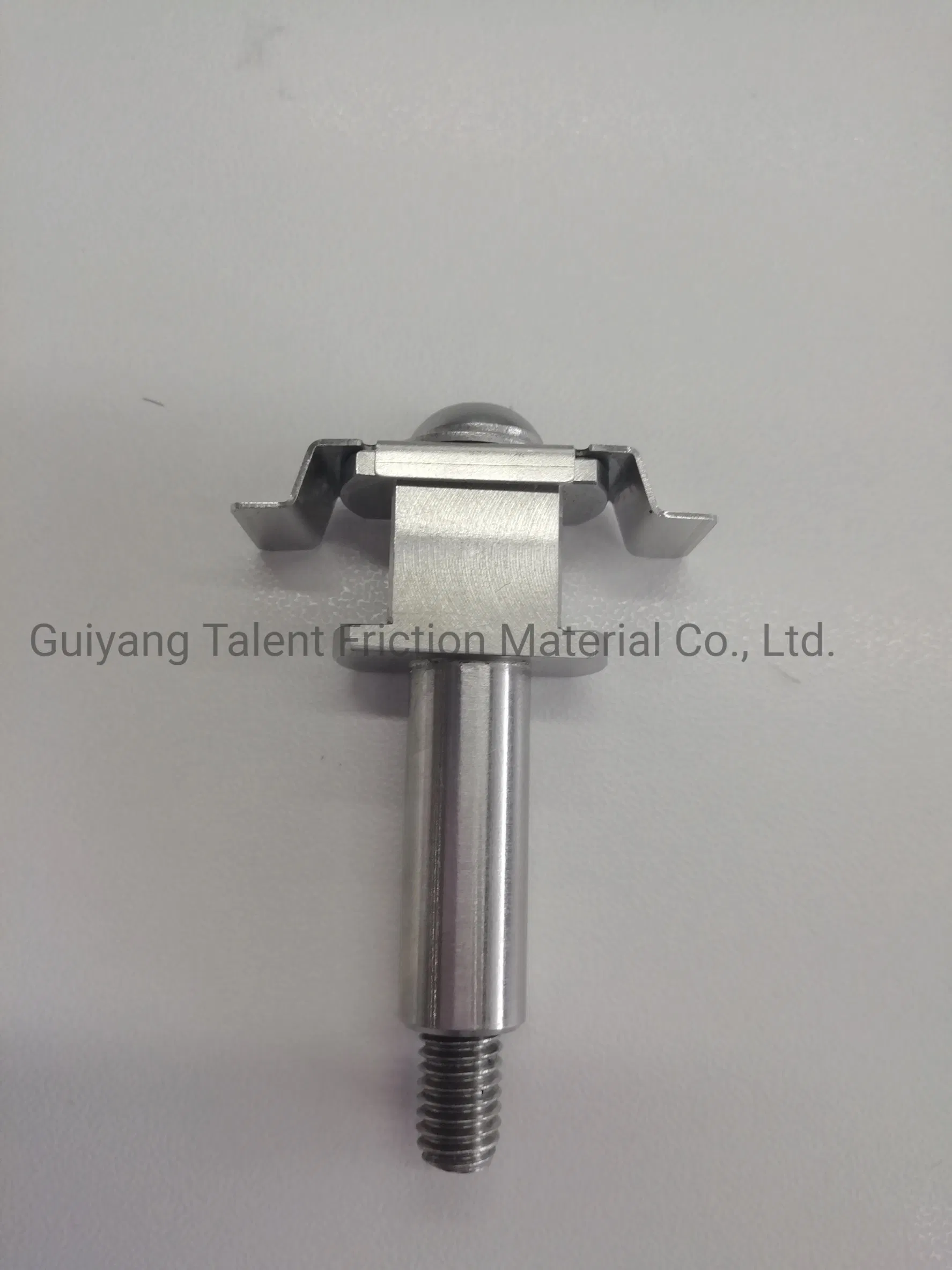
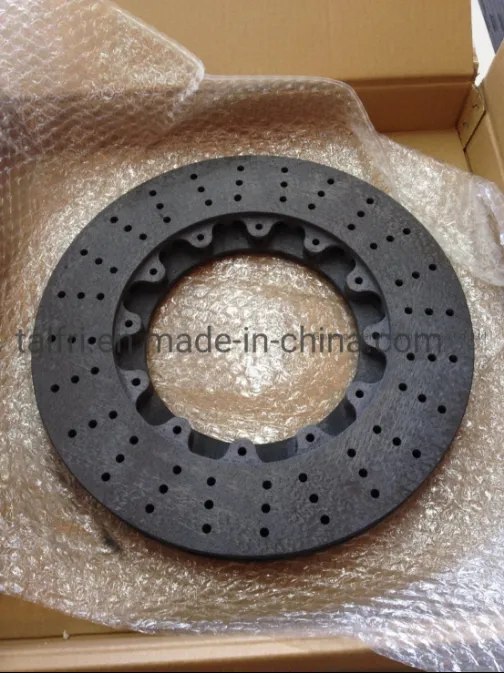
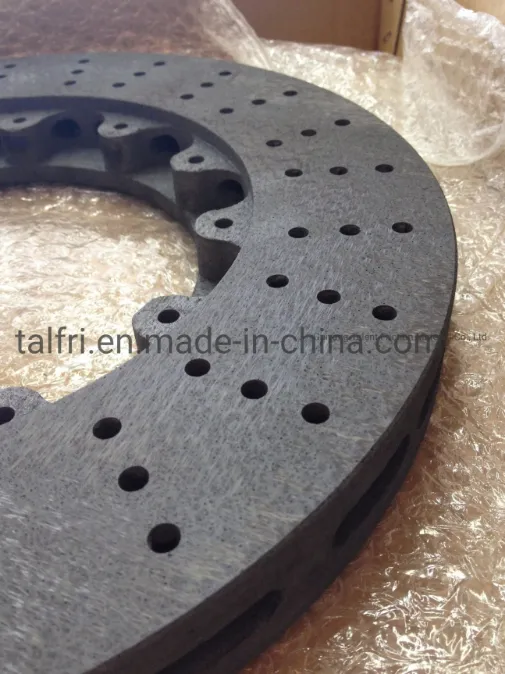
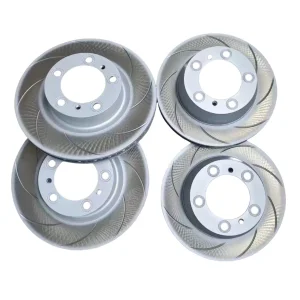
Carbon Ceramic Brake Rotor Overview: A special feature of the carbon ceramic brake discs is represented by the carbon ceramic composite material. This material is obtained through a particular process, which gives the possibility to add or deposit a layer of material to improve the friction coefficient on both the braking surfaces.
| Physical Properties |
| Density/ g/cm3 | 2.0±0.05 |
| Tensile Strength/ MPa | 87 |
| Compressive Strength/ MPa | 212 |
| Bending Strength/ MPa | 189 |
| Interlaminar Shear Strength/MPa | 26 |
| In-plane Shear Strength/MPa | 49 |
| Room Temperature Specific Heat/ J/kg·k | 1140-1880(RT-1200ºC) |
| Thermal Conductivity/ W/mK | 40~50 |
| Frictional Properties |
| Dry | 0.27~0.35 |
| In Fresh Water | 0.29~0.35 |
| In Sea Water | 0.24~0.29 |
| @Static | 0.35~0.55 |
Direct Manufacturer Pricing
Strict Quality Inspection
High-end European Market Quality
Advanced Production Line
Bespoke Customization Available
ISO9001:2015 & IATF16949 Certified
Lifetime: 70,000 - 80,000 kms
✔
Quality Control Process
Initial Sample Check
Technical Drawing Confirmation
In-production Technician Audit
Mechanical Properties Verification
Robust Export Packaging
Final Pre-dispatch Inspection
?
Frequently Asked Questions
What are the main advantages of Carbon Ceramic Brake Rotors?
Carbon ceramic rotors offer extreme heat resistance, significant weight reduction (unsprung mass), and consistent friction performance even under high-temperature racing conditions compared to traditional steel discs.
How long do these brake rotors typically last?
Under normal driving conditions, these rotors are designed for a long lifespan ranging from 70,000 to 80,000 kilometers, depending on driving habits and vehicle application.
Are these rotors suitable for track use?
Yes, they are specifically engineered for high-performance sports cars and racing cars, providing the high thermal stability required for track environments.
Do they maintain braking performance in wet conditions?
Absolutely. As shown in our frictional properties data, the rotors maintain a stable friction coefficient of 0.24~0.35 in fresh water and sea water environments.
What certifications do your manufacturing processes hold?
Our production facilities are certified under ISO9001:2015 and IATF16949, ensuring international quality management standards are strictly followed.
Can these rotors be customized for specific vehicle models?
Yes, we offer bespoke services to match specific technical drawings and mechanical property requirements for different automotive applications.
 MOAD AUTO